-
[Korean Culture/Situational Korean] What Does “섭섭하다” Mean in Korean?
There is a Korean word that is almost impossible to translate directly into English. It is “섭섭하다.”, “서운하다.” 섭섭하다 Dictionary Pronunciation: Seop-seop-ha-da Easy Pronunciation: Suhp-suhp-ha-da 서운하다 Dictionary Pronunciation: Seo-un-ha-da Easy Pronunciation: Suh-oon-ha-da Both words describe a disappointed or hurt feeling that comes from something not meeting your expectations. If you look closely, the nuances…
-
[Situational Korean : Role-Play] How to Order Coffee at a Cafe in Korea
Today, let’s practice a Korean cafe role-play using only the sentences we learned last time. (Paying by card) In Korea, you may receive a receipt with an order number on it. In that case, when your drink is ready, the staff will call your order number. Or sometimes, the staff will give you a…
-
[Situational Korean] How to Order Coffee at a Cafe in Korea: Very Easy Korean Phrases
There are so many cafes in Korea. It is quite common to see three or four cafés in just one building. Today, let’s learn how to order coffee at a café in Korea. One Americano, please. Use this when you want to order one Americano. Korean: 아메리카노 하나 주세요. Dictionary Pronunciation: A-me-ri-ka-no ha-na ju-se-yo…
-
[Situational Korean] How to Say Goodbye in Korean
Today, let’s learn how to say goodbye in Korean. In Korea, people usually say goodbye using the expressions below. 안녕히 계세요 Use this when the other person is staying, and you are leaving. English Meaning: Goodbye. Dictionary Pronunciation: An-nyeong-hi gye-se-yo Easy Pronunciation: An-nyuh-ee gay-say-O 안녕히 가세요 Use this when the other person is leaving.…
-
[Sentence Patterns] What Does “아니 근데” Mean in Korean?
Today, let’s talk about a very common Korean phrase : “아니, 근데” (Ah-nee, geun-deh) This is not really a grammar pattern. It is more like a small phrase that Koreans often use at the beginning of a sentence. But if you want to sound more natural in Korean, expressions like this are really useful.…
-
[Sentence Patterns] How to Say “Can I Get…?” in Korean: 주세요 (Ju-say-O)
Today, we are going to practice the “~주세요 (Ju-say-O)” pattern. This one is very, very easy. “~주세요 (Ju-say-O)” literally means something like “Give me ~.” Of course, in English, “Give me” can sound a little rude or too direct. But in Korean, “~주세요 (Ju-say-O)” is not rude. It is a very normal and common…
-
[Situational Korean] How to Say “I Don’t Speak Korean” in Korean
Let’s learn some Korean for absolute beginners. These phrases are useful when someone speaks to you in Korean, but you do not know how to answer yet. Even if you do not speak Korean well, learning just a few simple phrases can help you respond in Korean. I don’t speak Korean well. Use this…
-
[Situational Korean] How to Count Items in Korean: One to Ten
When you buy something, there may be times when you need to count numbers. In Korean, there is more than one way to count numbers. But today, we are going to learn the basic numbers you can use when buying things or ordering food. These are useful when you want to say how many…
-
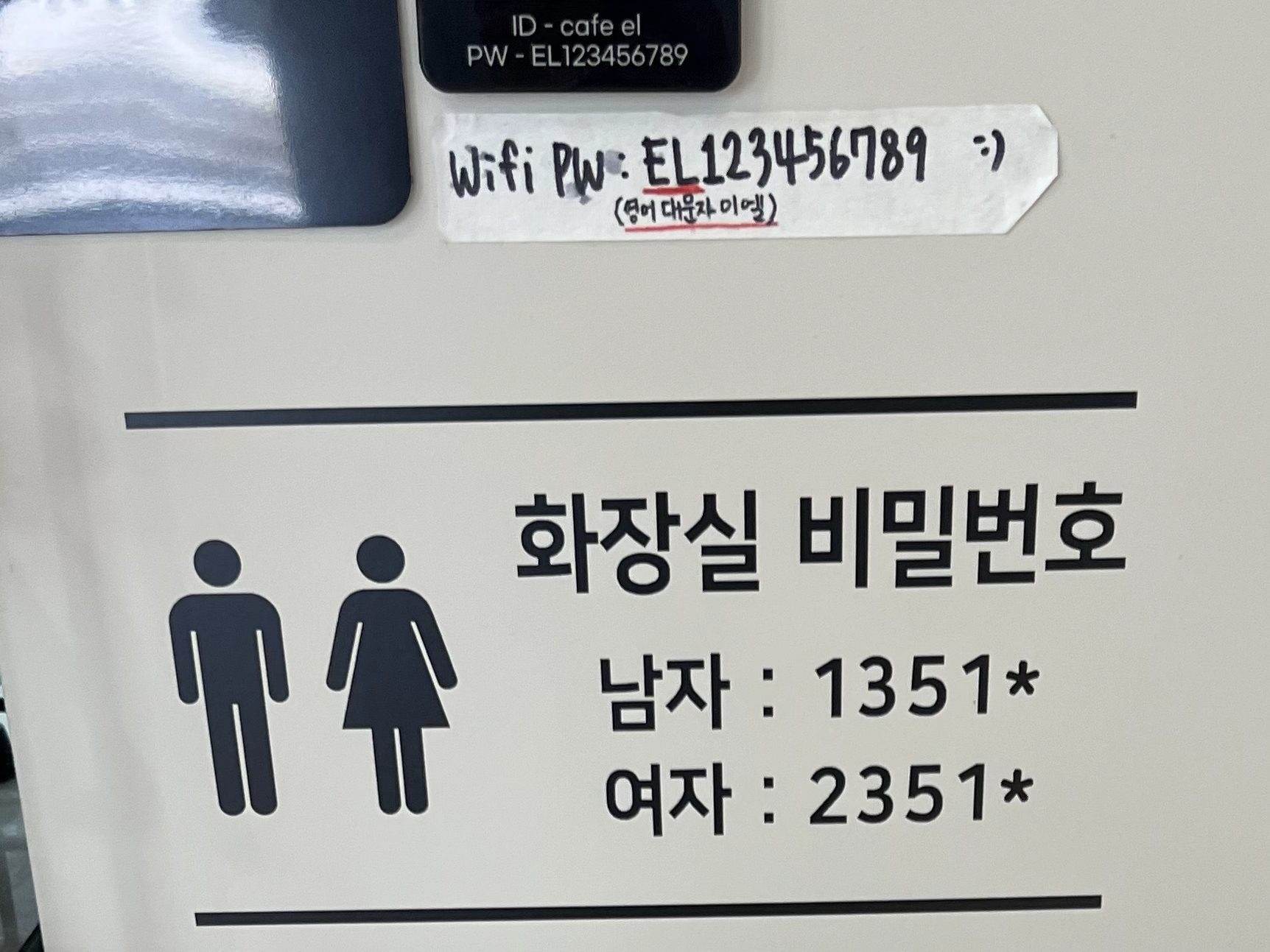
[Situational Korean] Essential Korean Travel Phrases for Korea: Restrooms, Wi-Fi, Directions, and More
Before we move on to small talk conversations, there are a few basic phrases that are really useful when traveling in Korea. These are the kinds of sentences you may need at cafés, restaurants, shops, subway stations, or while walking around the city. Where is the restroom? Korean: 화장실은 어디예요? Dictionary Pronunciation: Hwa-jang-sil-eun eo-di-ye-yo…
-

[Situational Korean : Role-Play] How to Check In at a Hotel in Korea
In the last post, I introduced four useful sentences for hotel check-in. Now, let’s use them in a role-play and see how the other person might respond. When Checking In at a Hotel Me: 안녕하세요, 체크인하려고요.English: Hello, I’d like to check in.Pronunciation: an-nya-seh-yo, check-in halla-go-yo Staff: 어서오세요. 성함 한번 말씀 부탁드립니다.English: Welcome. May I…